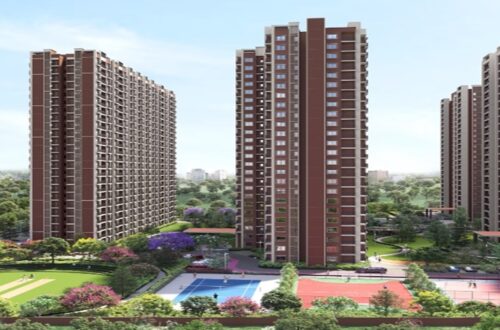

Brigade Saravanampatti is an upcoming residential development associated with Saravanampatti, Coimbatore and its proposed development model is a useful starting point for understanding how Joint Development Agreements work in the city’s growing property market. A JDA, or Joint Development Agreement, is a legal arrangement in which a landowner and a developer work together to develop a property. The landowner generally contributes the land, while the developer brings planning expertise, project execution capability, construction resources and market access. The final commercial structure depends on the agreement between both parties.
For buyers and investors, understanding a JDA is important because land ownership, development rights, construction responsibility, revenue sharing and apartment allocation can all be handled differently under different models. The Brigade Saravanampatti Price, Brigade Saravanampatti Price List, apartment configuration, payment obligations and ownership documents should therefore be evaluated through official project documentation rather than assumptions about a JDA structure. The purpose of this article is to explain how JDA development models generally work in Coimbatore and what prospective buyers should examine before making a property decision.
What Is a Joint Development Agreement
A Joint Development Agreement is a contract between a landowner and a developer for developing a property.
The landowner owns the land but may not have the resources, experience or intention to develop it independently. A developer, meanwhile, may have construction expertise and access to buyers but may not own suitable land in every location.
A JDA brings these two interests together.
The landowner provides development rights over the property according to agreed terms. The developer undertakes development activities according to the contract. In return, the landowner receives an agreed benefit.
That benefit can take different forms.
The landowner may receive a share of the completed apartments. In another arrangement, the landowner may receive a percentage of sales revenue. Some agreements can involve a combination of fixed payments and a share in the developed property.
The exact structure depends on negotiations, project economics and legal terms.
Why JDAs Are Relevant to Coimbatore Real Estate
Coimbatore has a diverse property market with established residential areas, expanding suburbs, employment corridors and developing neighbourhoods.
Landowners in these locations may own valuable parcels but may not want to undertake an entire apartment project themselves.
At the same time, developers may want access to strategically located land without purchasing it outright.
A JDA can provide a possible solution.
Instead of the developer purchasing the entire property, both parties enter into a development arrangement.
This can reduce the initial land acquisition requirement for the developer while giving the landowner an opportunity to participate in the development value of the property.
For a city such as Coimbatore, this model can be relevant for residential apartments, plotted developments, commercial buildings and mixed use projects.
How a Basic JDA Model Works
A simple JDA can be understood through three stages.
First, the landowner and developer negotiate the terms.
Second, the agreement establishes who will be responsible for development, approvals, construction, marketing, sales and financial obligations.
Third, the completed development is divided or monetised according to the agreed commercial arrangement.
The details matter greatly.
A poorly drafted agreement can create disputes even when both parties begin with good intentions.
A well structured agreement clearly explains the rights and responsibilities of everyone involved.
That is why legal documentation is at the centre of every serious JDA.
Landowner and Developer Roles
The two primary parties in a JDA usually have different responsibilities.
The landowner contributes the property and grants the developer specific development rights.
The developer generally manages the development process.
This may include architectural planning, approvals, construction, contractor management, marketing and sales, depending on the agreement.
However, there is no universal JDA format.
Some landowners may remain heavily involved.
Others may prefer a passive role after granting development rights.
The agreement must clearly establish these responsibilities.
Why Land Title Is the First Major Concern
Before any development begins, the land title must be carefully examined.
A developer cannot safely build on land where ownership is uncertain.
The title search should identify the legal owner and any existing claims, mortgages, disputes, easements or restrictions affecting the property.
Historical documents may also need to be examined.
For a JDA, title verification becomes especially important because the developer is committing significant resources to land that it may not own.
Buyers should also understand the title position when purchasing an apartment in a JDA project.
A project marketed by a reputed developer should still be evaluated on the basis of its project specific documentation.
What a JDA Agreement Usually Covers
A detailed JDA can cover many subjects.
The agreement may identify the land, development rights, construction responsibilities, approvals, project specifications, revenue sharing or apartment sharing arrangement, timelines and termination conditions.
It can also establish who pays for different expenses.
This is important because construction projects involve numerous costs.
Land related expenses, approval fees, construction costs, professional fees, marketing expenses and statutory charges may all need to be allocated.
The agreement should avoid vague language wherever possible.
Clear responsibilities reduce the chance of disputes later.
Revenue Sharing JDA Model
One common JDA structure is revenue sharing.
Under this model, the landowner and developer agree to divide the revenue generated from the sale of units according to a predetermined formula.
The percentage can vary significantly from one project to another.
It depends on land value, development potential, construction cost, market demand, project size and negotiation strength.
For example, a landowner contributing a highly valuable parcel may negotiate a larger share.
A developer bringing significant construction investment and execution responsibility may seek a larger share of project revenue.
The actual percentage should never be assumed without reviewing the signed agreement.
Area Sharing JDA Model
Another common structure is area sharing.
Instead of dividing sales revenue, the landowner receives a predetermined share of the completed development.
For example, the landowner may receive a certain percentage of the apartments or a specified built up area.
The developer receives the remaining share.
This model can be attractive to landowners who want to retain property rather than receive sales revenue.
It can also give the landowner an opportunity to benefit from future property appreciation.
However, the agreement should clearly specify which units or areas belong to each party.
Why Unit Allocation Matters
In an area sharing arrangement, unit allocation is extremely important.
A simple percentage does not always tell the whole story.
Two apartments with the same area may have different market values because of floor, orientation, view, location and layout.
Therefore, a JDA should clearly establish how units are allocated.
If the landowner receives a particular percentage of units, the agreement should address how those units are selected.
It should also explain what happens if the approved plan changes.
Without clear provisions, disagreements can arise later.
Hybrid JDA Models
Some arrangements can combine different financial mechanisms.
A landowner may receive an upfront amount along with a share of revenue.
Alternatively, the landowner may receive guaranteed consideration plus a specified share of developed units.
These hybrid arrangements can provide greater flexibility.
However, they also require more detailed financial documentation.
Both parties should understand the calculation method.
Terms such as gross revenue, net revenue, project expenses and recoverable costs should be clearly defined.
A vague definition can create disagreements about the amount each party is entitled to receive.
JDA Versus Outright Land Sale
A JDA is different from an outright sale.
In an outright sale, the landowner transfers the property to the buyer for an agreed consideration.
In a JDA, the landowner may retain ownership while giving development rights to the developer under agreed conditions.
This distinction is important.
The landowner may participate in the economic value created by the development instead of receiving only a one time sale amount.
For developers, the JDA can reduce the need for a large upfront land purchase.
However, the developer takes on development and market risk.
Why Developers Consider JDAs
Land acquisition can represent a significant portion of development cost.
A developer that purchases land outright needs substantial capital before construction begins.
A JDA can change that financial structure.
Instead of purchasing the land completely, the developer negotiates development rights.
This can allow the developer to allocate more capital towards construction, approvals, marketing and other project requirements.
However, a JDA does not remove financial risk.
The developer still has to execute the project, manage costs, obtain necessary approvals and sell or deliver the development.
Why Landowners Consider JDAs
Landowners may have valuable property but lack development expertise.
Building an apartment project independently requires planning, financing, contractor management, regulatory knowledge and sales capability.
A JDA allows the landowner to partner with a professional developer.
The landowner can potentially benefit from the development value of the property without handling every stage of construction.
However, the landowner gives another party significant rights over the property.
Therefore, the choice of developer and the quality of the agreement are extremely important.
JDA and Development Rights
Development rights are at the heart of a JDA.
The landowner needs to grant the developer enough rights to carry out the agreed development.
The agreement should specify the scope of these rights.
It should also establish what the developer cannot do.
For example, development rights should not be interpreted as unlimited authority beyond the project agreed by both parties.
Clear boundaries protect both sides.
Approvals in a JDA Project
A residential development requires multiple approvals and compliance steps depending on the project, location, size and applicable regulations.
The agreement should establish which party is responsible for obtaining each approval.
This may include planning permissions, building approvals, environmental requirements where applicable and registration under relevant real estate regulations.
Buyers should not assume that an agreement between a landowner and developer itself means that the project has received every required approval.
Each approval should be verified independently.
RERA and JDA Projects
Real estate regulation has an important role in residential development.
Where a project falls within the scope of applicable RERA requirements, buyers should review the project’s registration details and disclosures.
RERA related information can help buyers understand project status, promoter details, approvals and other disclosed information.
A JDA does not remove the need for regulatory compliance.
Buyers should check the relevant project registration and official records before making a significant payment.
How Buyers Should Understand a JDA Project
Homebuyers do not necessarily need to become legal experts.
However, they should understand the basic structure.
Start by identifying the landowner and developer.
Then check who is responsible for development.
Review the project’s regulatory status.
Understand the sale agreement.
Check the title and development rights through appropriate professional review.
Finally, understand who will execute the final conveyance or sale documentation.
These steps can provide much greater clarity.
Brigade Saravanampatti and the JDA Question
When researching Brigade Saravanampatti, buyers may encounter discussions about development models, land partnerships and JDA structures.
It is important to separate general JDA concepts from confirmed project specific facts.
A project should not be described as operating under a particular JDA model unless the relevant official documentation establishes that structure.
This distinction matters for SEO content as well as buyer trust.
Unverified claims about ownership or contractual arrangements can create confusion.
For this reason, buyers should rely on official project documentation and applicable regulatory records when evaluating the exact development structure.
Brigade Saravanampatti Coimbatore as a JDA Case Study
Brigade Saravanampatti Coimbatore can be used as a useful context for understanding how a large residential development may be evaluated within the broader Coimbatore market.
Saravanampatti has developed as an important residential and employment linked locality.
For any project in this area, buyers may examine land ownership, development rights, project approvals, construction responsibility and sales arrangements.
These questions are relevant whether a project is developed through outright ownership, a JDA or another development structure.
The key point is to understand the legal and commercial framework behind the project rather than relying on assumptions.
How JDA Structure Can Affect Property Pricing
The Brigade Saravanampatti Property Price should not be assumed to depend directly on whether a project uses a JDA.
Property pricing is influenced by several factors.
Land value is one factor.
Construction cost is another.
Apartment size, location, amenities, demand, project positioning and market conditions also matter.
In a JDA project, the economic arrangement between the landowner and developer can form part of the project’s cost structure.
However, the final customer price is determined by the overall project economics and market positioning.
Therefore, buyers should compare the final quoted price with the property’s features and local market context.
Brigade Saravanampatti Price and JDA Economics
The Brigade Saravanampatti Price should be evaluated independently from speculation about the project’s development arrangement.
If the project uses a JDA structure, the developer and landowner will have their own commercial agreement.
That does not mean buyers can calculate the apartment price simply by looking at the revenue share.
Many other expenses are involved.
Construction, professional services, approvals, financing, marketing, taxes and infrastructure all influence project economics.
Buyers should therefore rely on the official cost sheet rather than attempting to reverse engineer the developer’s agreement.
Understanding the Brigade Saravanampatti Price List
The Brigade Saravanampatti Price List should be checked carefully when it becomes officially available.
Buyers should distinguish between the basic apartment price and the complete acquisition cost.
A detailed cost sheet may contain multiple components.
The exact structure will depend on the project and applicable charges.
Ask for written clarification about each component.
This is especially important when comparing different configurations.
Brigade Saravanampatti Price in Coimbatore
The Brigade Saravanampatti Price in Coimbatore should be compared with similar properties only after confirming that the measurements and inclusions are comparable.
A quoted rate per sq ft can be misleading if different area definitions are being used.
Buyers should also consider the age of competing projects, location, specifications and amenities.
A newer development may have different pricing because of its construction stage and product positioning.
The JDA structure itself should not be used as the sole reason to judge whether the price is reasonable.
Brigade Saravanampatti 2 BHK Price and Development Economics
The Brigade Saravanampatti 2 BHK Price will ultimately depend on the official size, specifications, location and pricing strategy.
For buyers considering a 2 BHK, the JDA question is less important than understanding the legal and commercial structure of the specific project.
Check whether the unit is part of the developer’s allocation or landowner’s allocation if such a structure applies.
Also confirm who is authorised to sell the unit and whether the sale documentation is properly structured.
These checks can provide greater confidence than simply comparing prices.
Brigade Saravanampatti 3 BHK Price and Unit Allocation
The Brigade Saravanampatti 3 BHK Price may be higher because of the larger area and additional room.
If an area sharing model applies to a project, unit allocation becomes particularly important.
Buyers should understand whether the apartment they are purchasing belongs to the developer’s share or another allocation category.
The sale authority should be clear.
The final agreement should also identify the seller or parties involved in the transaction.
These details should be reviewed before making a large payment.
Brigade Saravanampatti Apartments Price and JDA Structure
The Brigade Saravanampatti Apartments Price should be assessed through the final official pricing information.
The fact that a project may involve a landowner developer arrangement does not automatically mean the apartments are cheaper or more expensive.
Pricing depends on project economics and market positioning.
The more useful question for a buyer is whether the apartment offers appropriate value for its location, size, layout, construction quality and facilities.
Brigade Saravanampatti Cost and Additional Charges
The Brigade Saravanampatti Cost should be calculated as the complete expected expenditure rather than the headline apartment price.
Buyers should ask for a detailed written cost sheet.
The document should explain the applicable components clearly.
Also consider expenses outside the developer’s basic quote, such as interiors, furniture, moving expenses and recurring maintenance.
A JDA structure does not change the need for buyers to understand their own complete budget.
Brigade Saravanampatti Price Per Sq Ft
The Brigade Saravanampatti Price Per Sq Ft can be useful for comparison.
However, buyers should first establish what area has been used.
If one property quotes a rate based on carpet area and another uses saleable area, comparing the two numbers directly can create the wrong impression.
The better approach is to compare like with like.
Also consider the actual layout.
A highly efficient apartment can offer better usable value than a larger but poorly planned home.
Booking Amount in a JDA Project
The Brigade Saravanampatti Booking Amount should only be paid after buyers understand the booking conditions.
This is particularly important when a project involves multiple parties or a development arrangement.
The buyer should know who is receiving the payment.
The buyer should also understand how the amount is adjusted against the final purchase price.
Cancellation and refund terms should be documented.
Do not make a major payment based solely on an informal explanation.
Brigade Saravanampatti Payment Plan
The Brigade Saravanampatti Payment Plan should be reviewed alongside the construction schedule and agreement terms.
A payment plan may be linked to specific milestones, depending on the project’s final structure.
Buyers should check the amount payable at each stage.
If a JDA involves multiple parties, the agreement should make it clear how payments are handled and who is legally authorised to receive them.
Written clarity is essential.
Financial Responsibilities in a JDA
One of the most important parts of a JDA is financial responsibility.
The agreement should state who pays for construction.
It should also identify responsibility for approvals, consultants, marketing, taxes and other project costs.
If the landowner is expected to contribute additional funds, that should be clearly documented.
Similarly, if the developer is responsible for all construction expenses, the agreement should state that obligation.
Financial ambiguity can become a major source of conflict.
Construction Risk
Construction is one of the largest risks in a JDA.
The developer has to manage labour, materials, contractors, timelines, quality and cost fluctuations.
If construction costs increase significantly, the financial balance of the project may change.
The JDA should address how major cost variations are handled.
Buyers should also review the developer’s project execution record and the specific project’s contractual commitments.
Timeline and Completion Obligations
A JDA should establish development timelines.
This can include dates for approvals, construction milestones and completion.
There should also be provisions for delays.
The consequences of delay need to be understood by both parties.
For buyers, project completion and possession timelines should be reviewed through official project disclosures and the sale agreement.
Do not rely only on estimated dates used in advertisements.
What Happens if the JDA Is Terminated
A strong agreement should explain what happens if the relationship between the landowner and developer breaks down.
Termination clauses can cover failure to perform, prolonged delays, legal disputes, financing issues or other specified events.
The agreement should explain what happens to construction already completed and rights already created.
This is a complicated legal area.
Buyers should have the sale and project documents reviewed by a qualified property lawyer where necessary.
JDA and Dispute Resolution
No business relationship is completely free from risk.
A JDA should therefore include a mechanism for resolving disputes.
This may specify negotiation, mediation, arbitration or court jurisdiction depending on the agreement and applicable law.
The exact mechanism should be reviewed by legal professionals.
For buyers, the important point is to understand that a JDA is a legally significant contract.
Its terms can affect the project if a serious dispute arises between the parties.
Due Diligence for Landowners
Landowners should not choose a developer only because of brand recognition.
They should evaluate financial capability, construction experience, project execution record and reputation.
The developer should have the resources to complete the proposed project.
The landowner should also understand every clause before granting development rights.
Independent legal and financial advice can be valuable.
Due Diligence for Developers
Developers should conduct thorough title verification before signing.
They should identify all owners and interested parties.
Existing loans, claims, litigation, easements and restrictions should be investigated.
The development potential of the site should also be studied.
A project can become financially difficult if the development potential assumed during negotiation cannot be achieved after approvals.
Therefore, technical and legal due diligence should happen before major commitments.
Due Diligence for Homebuyers
Homebuyers sit at a different position in the transaction.
They may not be parties to the original JDA, but the agreement can still influence the project’s legal structure.
Buyers should therefore verify the project’s official records.
They should understand the identity of the seller or promoter.
They should review the sale agreement.
They should check applicable project registration details.
They should understand the title and development rights through appropriate documentation.
If anything is unclear, independent legal advice is sensible.
JDA and Marketing Rights
Marketing and sales authority should be clearly established.
A developer may be responsible for selling its share of apartments.
The landowner may have rights over its own allocation.
The agreement should define who can market which units.
This prevents conflicting sales claims.
For buyers, the practical question is simple.
Who has the legal authority to sell the apartment?
That answer should be clear in the transaction documents.
JDA and Home Loan Approval
Home loan providers generally require property and project documents to meet their lending requirements.
For a JDA property, the bank may examine additional documents related to title and development rights.
Buyers should not assume that loan approval will automatically be available for every unit.
It is useful to discuss the property documentation with the chosen lender before committing substantial funds.
Loan eligibility and property legal approval are separate matters.
Why Clear Documentation Builds Buyer Confidence
A transparent project gives buyers confidence.
The more clearly the developer explains project status, pricing, approvals, unit details and contractual arrangements, the easier it becomes for buyers to make informed decisions.
This principle applies to both JDA and non JDA projects.
A strong brand can attract attention, but documentation creates confidence.
For Brigade Saravanampatti, prospective buyers should therefore focus on verified project information rather than online speculation.
Brigade Saravanampatti New Launch and Early Stage Due Diligence
A Brigade Saravanampatti New Launch can attract interest from buyers who want early access to a project.
However, early stage information may not contain every final detail.
Prices, apartment sizes, floor plans, amenities and schedules may be subject to official confirmation.
Buyers should therefore avoid treating preliminary information as a final contractual promise.
This is particularly important when discussing a possible development structure.
The JDA arrangement, if applicable, should be established through official documents.
Why JDA Does Not Automatically Mean Lower Prices
There is a common assumption that a developer using a JDA will offer cheaper apartments because it does not purchase the land outright.
This is not necessarily true.
A developer still has to provide the landowner with an agreed economic benefit.
It must also pay for construction, approvals, financing, marketing and other project costs.
Market pricing depends on the total economics of the project.
Therefore, buyers should not assume that a JDA project will automatically have a lower price.
Why JDA Does Not Automatically Mean Higher Risk
The opposite assumption can also be misleading.
A JDA is not automatically a problematic development model.
It is a widely used form of collaboration between landowners and developers.
The actual level of risk depends on the quality of the agreement, title, approvals, developer capability, financial structure and regulatory compliance.
A well documented JDA can provide a clear framework for both parties.
The important point is due diligence.
JDA Models and Coimbatore’s Future Residential Demand
As Coimbatore continues to expand, development models can evolve with changing land values and buyer requirements.
Landowners may look for ways to maximise the value of their property.
Developers may seek opportunities in established and emerging residential corridors.
JDA arrangements can help bring these interests together.
However, market demand must still support the proposed project.
Good land alone does not guarantee a successful development.
The final product needs to match what buyers in that locality actually want.
What Makes a JDA Project Successful
Several elements can contribute to successful execution.
The land title should be clear.
The development agreement should be detailed.
The developer should have strong execution capability.
Approvals should be obtained properly.
Financial responsibilities should be clearly allocated.
Construction should follow the promised specifications.
Sales should be transparent.
The relationship between the landowner and developer should remain commercially workable throughout the project.
When these elements come together, a JDA can create value for everyone involved.
JDA Versus Joint Venture
A JDA and a joint venture are related concepts but should not automatically be treated as identical.
A JDA primarily establishes development rights and responsibilities between the landowner and developer.
A joint venture can involve a broader business arrangement in which parties jointly participate in an enterprise.
The exact legal structure depends on the documents.
Buyers should therefore use the correct terminology only after reviewing the project agreements.
JDA and Tax Considerations
JDA transactions can involve tax implications for both landowners and developers.
The tax treatment can depend on the structure of the agreement, timing, consideration, applicable laws and individual circumstances.
Because tax rules can change and depend on facts, landowners and developers should consult qualified tax professionals before entering into a JDA.
Homebuyers should also understand the applicable taxes and statutory charges associated with their purchase.
JDA and Stamp Duty Considerations
Legal documentation involving land and development rights can have stamp duty and registration implications.
The applicable treatment depends on the nature of the document and prevailing law.
This is not an area where parties should rely on generic online explanations.
A local property lawyer can review the agreement and explain the applicable requirements.
Questions a Landowner Should Ask
A landowner should ask how the developer will fund construction.
The landowner should understand the expected development timeline.
The agreement should explain how additional development potential is handled.
The landowner should also know what happens if approvals are delayed.
Questions about revenue sharing, unit allocation and termination should be answered before signing.
Every major commercial assumption should be documented.
Questions a Buyer Should Ask
A buyer should ask who owns the land.
Ask who the developer is.
Ask whether the developer has the necessary development rights.
Ask for project registration information where applicable.
Ask for the approved plans and project specifications.
Ask who is authorised to execute the sale.
Ask for the complete cost sheet.
Ask about the payment schedule.
Ask about possession commitments.
These questions are simple, but they can reveal whether the transaction has been properly structured.
How JDA Knowledge Helps Property Investors
Investors often focus heavily on location and price.
Understanding the development structure adds another layer of analysis.
A JDA can tell an investor that more than one party may have an economic interest in the project.
That does not automatically make the investment good or bad.
Instead, it tells the investor to examine the legal and commercial documentation carefully.
Investors should understand who controls development decisions and how the project is financed.
How JDA Knowledge Helps End Users
End users may be less interested in the commercial relationship between landowner and developer.
However, they still benefit from understanding it.
The development structure can affect documentation, sale authority and project execution.
A buyer who understands the basic arrangement can ask better questions before booking.
This can make the purchase process more transparent.
The Role of Brigade Enterprises Limited
Brigade Enterprises Limited is an established real estate developer with a presence across multiple property segments and Indian markets.
For buyers researching a Brigade project, the developer’s broader track record can provide useful background.
However, the reputation of a developer should never replace project specific verification.
The title, development rights, approvals, specifications, pricing and agreements of the particular project still need to be reviewed.
This is an important part of responsible property research.
How to Evaluate the Project From an E E A T Perspective
For property content to be useful, it should provide more than promotional statements.
Buyers need accurate information.
They need clear distinctions between confirmed facts and expectations.
They need practical guidance on documents, costs and risks.
They also need realistic explanations of what cannot be guaranteed.
This approach is particularly important for a JDA topic because legal and financial arrangements can be complex.
A trustworthy property page should help a reader ask the right questions rather than simply encourage a booking.
Why Buyers Should Avoid Unverified JDA Claims
Online property discussions can sometimes describe a project as a JDA development without providing documentary evidence.
That information should be treated carefully.
The presence of a landowner and developer relationship does not by itself establish the exact legal structure.
Similarly, a website listing a project does not necessarily mean that every project detail has been officially confirmed.
Buyers should verify important information through authoritative documents.
A Practical JDA Checklist for Coimbatore Projects
Before evaluating a JDA based residential project, start with title.
Then verify development rights.
Review the JDA structure where legally available.
Check approvals.
Verify project registration where applicable.
Understand the developer’s responsibilities.
Study the construction timeline.
Review the sale agreement.
Understand the complete cost.
Confirm payment terms.
Finally, seek professional advice for any unresolved legal question.
This process may take more time, but property purchases deserve that level of care.
Thoughts on JDA Development Models
Understanding JDA development models can help buyers, investors, developers and landowners make better decisions in the Coimbatore property market.
A Joint Development Agreement allows a landowner and developer to combine different strengths. The landowner contributes the property or development rights, while the developer generally contributes construction expertise, execution capability and project management. The commercial benefit can be structured through revenue sharing, area sharing or a hybrid arrangement.
For Brigade Saravanampatti, buyers should distinguish between general JDA principles and officially confirmed project information. The development structure should be verified through authoritative documents before it is treated as a fact.
The same approach applies to the Brigade Saravanampatti Price, Brigade Saravanampatti Price List, Brigade Saravanampatti Apartments Price and Brigade Saravanampatti Cost. Preliminary figures should not be treated as final until they are officially confirmed.
Buyers researching Brigade Saravanampatti Coimbatore should also consider the project’s location, apartment configuration, floor plans, approvals, construction commitments and complete purchase cost.
The Brigade Saravanampatti 2 BHK Price and Brigade Saravanampatti 3 BHK Price should be compared using the same area measurement and complete cost structure.
Likewise, the Brigade Saravanampatti Price Per Sq Ft should be understood carefully because different properties may use different area calculations.
Before paying the Brigade Saravanampatti Booking Amount, buyers should confirm the booking terms, refund conditions, unit details and payment adjustment provisions in writing.
The Brigade Saravanampatti Payment Plan should also be reviewed from the perspective of total affordability rather than only the initial payment.
For anyone researching a Brigade Saravanampatti New Launch, early information can be useful for understanding the project, but final decisions should be based on official plans, approvals, agreements and cost documents.
Ultimately, a JDA is neither automatically an advantage nor automatically a risk. Its success depends on the quality of the legal agreement, clarity of ownership, development rights, financial responsibilities, regulatory compliance and execution capability.
For homebuyers, the safest approach is simple. Understand the development structure, verify the documents, compare the complete cost and seek professional advice whenever a legal or financial point is unclear.
That approach is more valuable than relying on a promotional claim or an attractive preliminary price.
Frequently Asked Questions
1. What does JDA mean in a residential property project?
JDA stands for Joint Development Agreement. It is an arrangement in which a landowner and developer collaborate to develop a property. The landowner generally provides the land or development rights, while the developer handles agreed development responsibilities. The benefits are divided according to the terms of the agreement.
2. Can a landowner receive apartments instead of money under a JDA?
Yes. In an area sharing arrangement, the landowner can receive an agreed share of the completed development. The agreement should clearly identify how units are allocated and what happens if the approved project plan changes.
3. Does every developer and landowner partnership qualify as a JDA?
No. The legal nature of an arrangement depends on the actual documents and rights granted between the parties. Buyers should not assume a project is a JDA development simply because a developer is developing land owned by another party.
4. What should buyers verify when purchasing a flat in a JDA project?
Buyers should examine title related documents, development rights, project approvals, applicable registration information, sale authority, project specifications, payment terms and the final sale agreement. Professional legal review can be useful when the structure is complicated.
5. Can the landowner sell apartments in a JDA development?
It depends on the agreement. If the landowner receives a share of apartments, the JDA and related documents should establish the landowner’s rights and authority to sell those units. Buyers should verify the seller’s legal authority before making payment.
6. Does a JDA affect the home loan process?
It can require the lender to examine additional property and development documents. The lender may review title, development rights and other project papers before approving a loan. Buyers should discuss the specific property documentation with their lender.
7. Should buyers assume that a JDA project will have a lower Brigade Saravanampatti Property Price?
No. A JDA does not automatically determine the final customer price. Pricing depends on land economics, construction costs, project positioning, apartment size, demand, amenities and several other factors.
8. What is the safest way to understand the development structure of Brigade Saravanampatti?
Buyers should rely on official project documentation and applicable regulatory records rather than unverified online claims. Important matters such as land ownership, development rights, approvals, pricing and sale authority should be confirmed before making a substantial financial commitment.
Read More Projects : G Square Madurai offers premium residential and commercial plots in a well planned mixed use township located in a prime area of Madurai. The project features modern infrastructure, excellent road connectivity, landscaped spaces and strong investment potential for homebuyers and investors seeking long term value.